

A shared north star for strategy, budgets and daily choices
Stop guessing. Start aligning.
Without a thick report no one reads.
Most organisations are doing the right things. Just in different directions.
A sustainability strategy without a shared framework is a list of good intentions. Different teams prioritise differently, and trade-offs get made by whoever is in the room that day. Progress happens in pockets, not in patterns.
"Everyone agrees on the goal. No one agrees on what to do next."
"We have three different strategies running in parallel."
"We revisit the same decisions every quarter."
Systems-first planning. One clear story.
We help leadership teams build a shared framework that connects the long-term end-state to daily decisions. Everyone uses the same compass.
A shared definition of success
Science-based principles your teams use to evaluate trade-offs and set priorities.
A clear end-state and path forward
Backcasted from your sustainability goals. Grounded in what is possible now.
Aligned leadership
One story your board, executives and team leads all own and use in the same way.
Decisions that hold over time
Trade-offs become faster, clearer and less political when everyone shares the same framework.
A sustainability plan that keeps working
Building a sustainability plan does not start with a template. It starts with direction. Most plans stall because the goals are on paper before the organisation agrees on the route to get there. Then the document is right, and practice does something else.
We reverse the order. First we decide together where you are going, with science-based principles as the reference. Then we plan back to today, so every step in the plan has a reason. And we anchor the plan in the decisions, budgets and routines where it has to land.
Want to learn it yourself? In the two-day Planning for Sustainability you build your own plan with the FSSD framework. Want to see where your organisation stands first? The Embedding Scan reads your patterns across thirteen themes in about forty minutes. It is not a theory poster but a working tool your whole organisation uses, from boardroom to daily operations.
FSSD
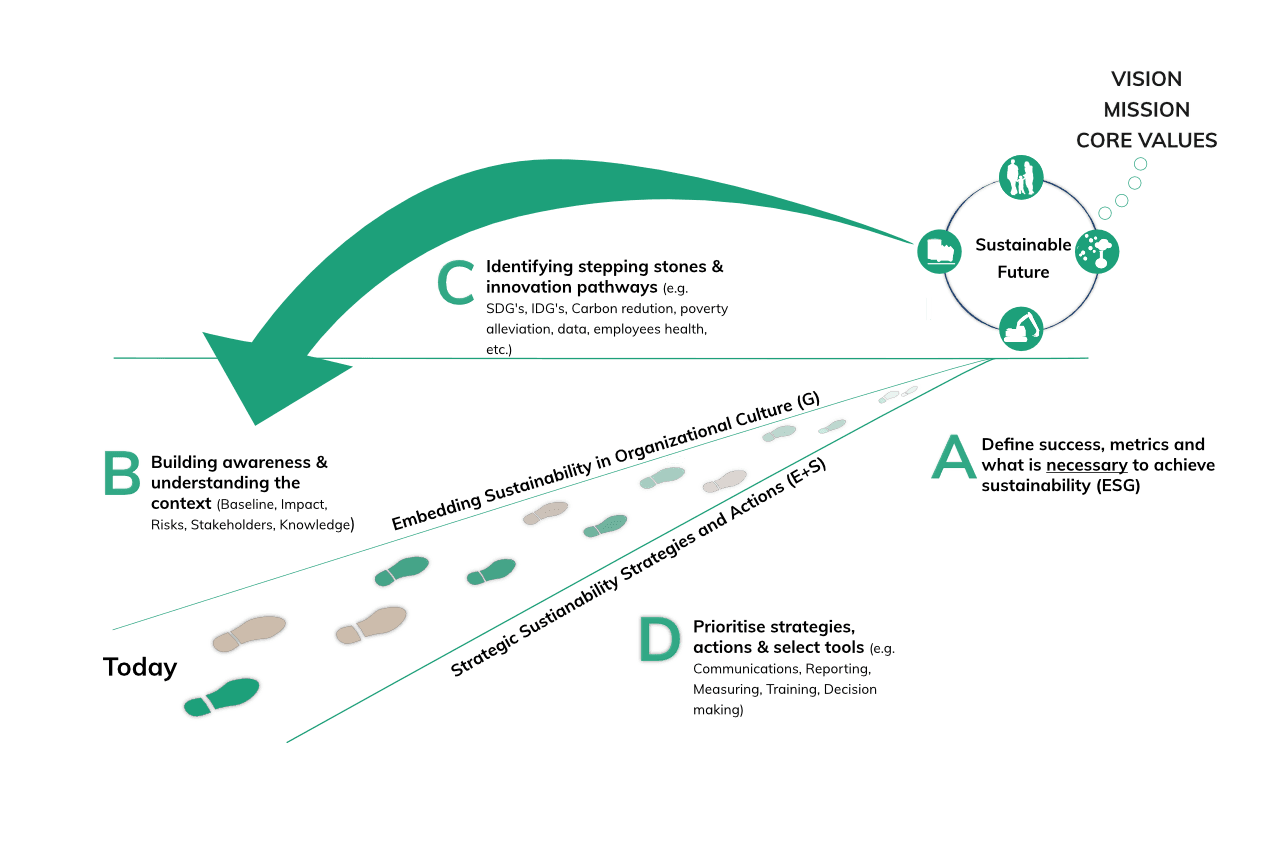
We use the Framework for Strategic Sustainable Development (FSSD), also known as The Natural Step Framework. It gives teams a clear way to set direction, even when sustainability feels messy.
- Define what sustainable means, within nature's limits and human needs.
- Make smarter choices, based on a shared set of principles.
- Plan backwards from the future you want, so actions connect and add up.
- Turn complexity into decisions, then into policy, strategy and daily work.
Proven in practice
"As we climb mount Sustainability, with the Sustainability Principles at the top, we are doing better than ever on bottom line business. This is not at the cost of social or ecological systems, but at the cost of our competitors who still haven't got it."
Ray C. Anderson, former CEO, Interface"FSSD has managed, like few others, to develop an operational model which can be applied within business, so one can go from knowledge to solution. And that bridge is exactly what is needed."
Johan Rockstrom, professor, Stockholm Resilience Centre"It was not until ten years later that we fully realised how much money we had saved and earned from applying the Framework for Strategic Sustainable Development to our business."
Leif Johansson, chairman of AstraZeneca, former CEO Electrolux and Volvo GroupNo two organisations start in the same place
Sustainability is not one plan fits all. Your best next step depends on things like:
- What is already moving inside your teams?
- Where are the real chances in your market or city?
- What do residents, customers and partners expect?
- Which rules and risks are coming your way?
We look at your reality first. Then we choose the simplest route that creates shared direction fast. Our aim: you own the plan as soon as possible. Because when sustainability fits your culture and daily work, it no longer needs constant pushing. If you are not sure where your organisation stands today, the Embedding Scan maps it across thirteen themes in about forty minutes.
Organisations that chose direction
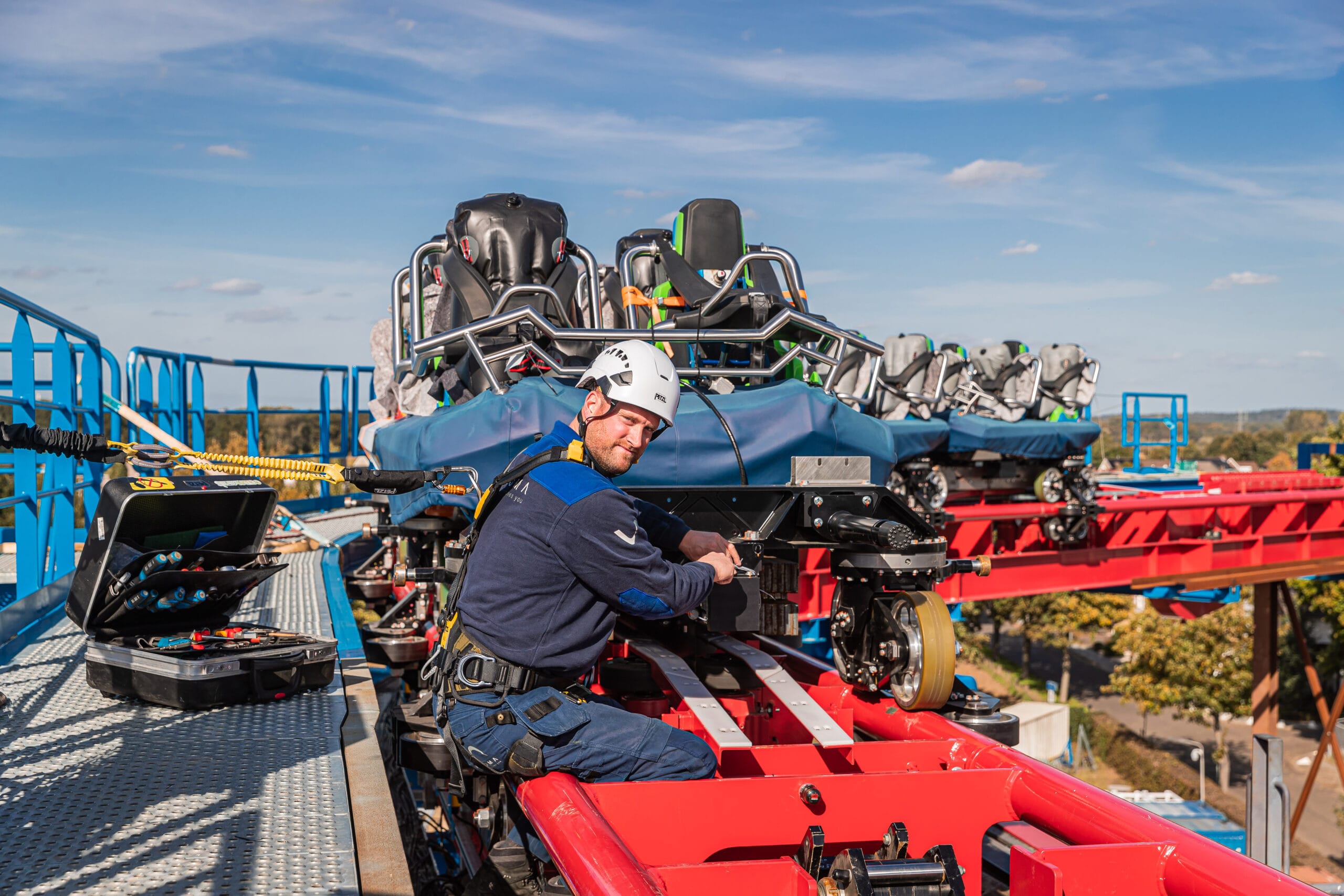
International machine manufacturer
Starting point
Sustainability goals existed, but work stayed spread across teams. Engineering, design, projects and sales lacked one shared direction.
How we worked
Interviews across all layers, then an on-site workshop to build one shared north star. A practical roadmap with priority choices, plus an ESG reporting framework.
Result
One shared future vision, translated into actions teams could start immediately. A clear plan owned by 350 people.
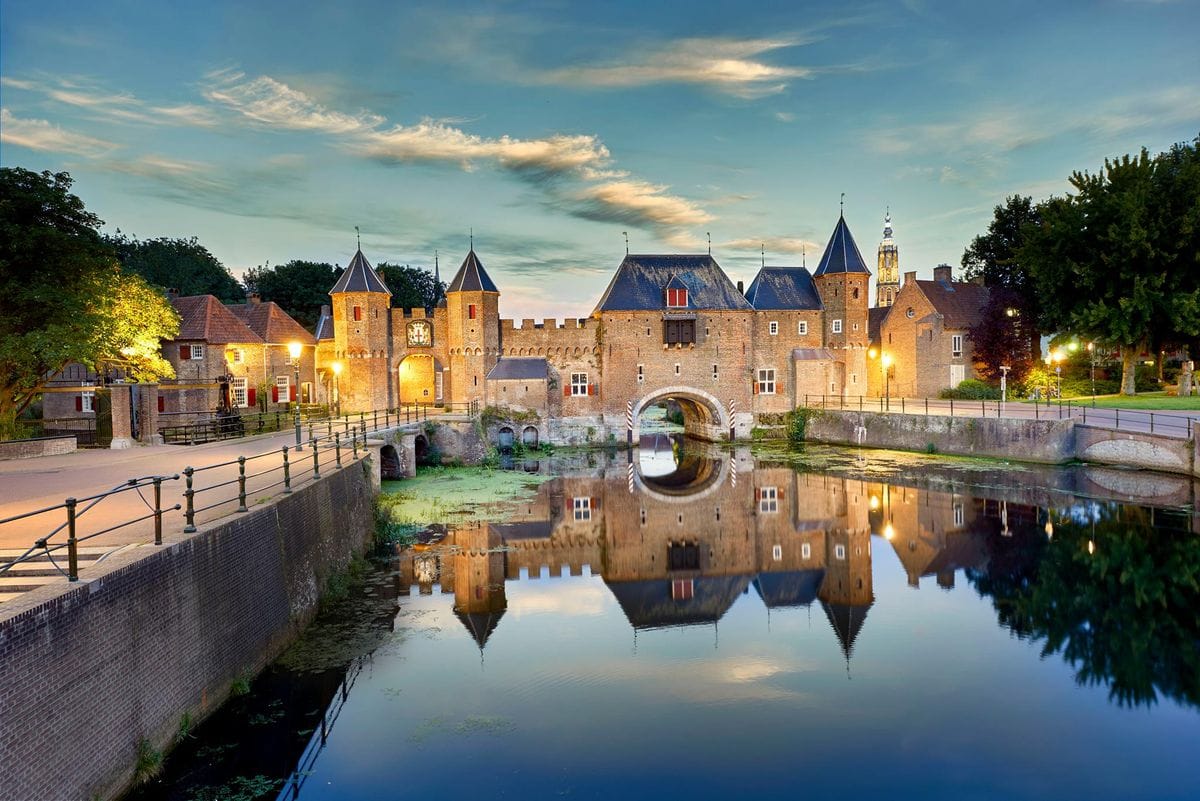
Municipality
Starting point
Many teams and projects, but no single approach tying them together. Sustainability meant something different per department.
How we worked
A year programme: mapping teams and projects, then four strategy sessions and an action plan. Governance support, plus e-learning and internal communication.
Result
A broadly supported plan, with clear steering. After 12 months, 1,500 employees spoke the same sustainability language.

Housing corporation
Starting point
Sustainability was treated as an add-on, project by project. It had to live in every phase: design, procurement, construction, maintenance, liveability.
How we worked
A training track of four sessions for 16 employees, with coaching and reflection.
Result
Sustainability became part of daily practice. The approach now supports making 33,000 homes sustainable, even through staff changes.
Ready to build shared direction in your organisation?
No pitch. No obligation. A clear conversation about where you want to go and how we work.