

Science-based, people-centred, built for real change
The frameworks and methods we use are internationally recognised and tested in practice for more than twenty years. This is what we work with, and why you can build on it.
The science is clear. The real work is people.
Slow progress in sustainability is rarely about politics or broken systems alone. Those barriers exist, but most sit outside your direct control. The real obstacles sit closer to home: fragmented thinking, fear of change, outdated leadership habits and rigid internal processes. They live inside your organisation. And those are the things you can change.
We know what a sustainable future asks for. The tools are available. The harder work is changing how people think, lead and work together. That is where most sustainability efforts stall. We draw on frameworks, methods and tools we have tested and applied in practice for more than twenty years. We use what works, and we know how to make it stick. See also who we worked with.
Why you can build on these methods
We do not sell a passing trend. We work with frameworks that have proven their worth across sectors, countries and decades.
Internationally recognised
The FSSD received the Blue Planet Prize, often called the Nobel Prize for sustainability. The methods are peer-reviewed and used worldwide.
Tested over time
The FSSD dates from 1989, the Embedding Framework from 2015, LIFO from the 1960s. We have applied them for over twenty years.
Widely applied
350+ organisations, 2,000+ professionals trained live, 3,000+ via e-learning, across multiple countries and sectors.
Academically grounded
Developed and tested at the Blekinge Institute of Technology and a Canadian research university, in partnership with practice.
Five proven instruments, used together
Framework for Strategic Sustainable Development (FSSD)
The FSSD, also known as The Natural Step Framework, is a science-based approach to sustainable development. Developed in 1989 by professor Karl-Henrik Robert and academically refined at the Blekinge Institute of Technology.
It is not a theory. It is a working system to set direction, used by organisations that want to work on sustainability with precision and confidence.
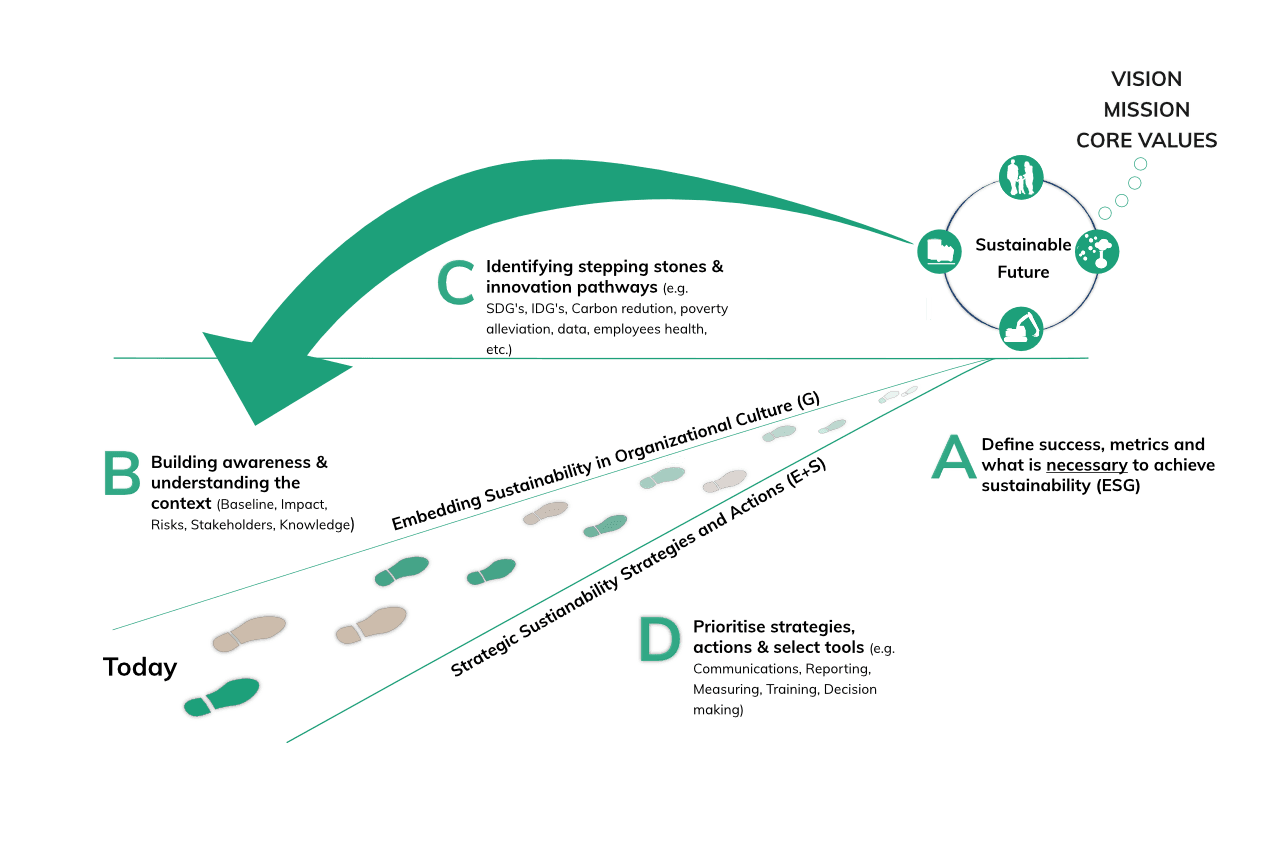
Sustainability Embedding Framework
Many sustainability strategies look strong on paper and stall in practice. They stay at the level of goals and reports, without reaching daily decisions and behaviour.
Developed in 2015 by researchers and practitioners who saw this pattern again and again. The tools were tested and refined in real partnership with companies. The result helps organisations make sustainability part of everyday practice and a sustainable culture. Measure where you stand with the Embedding Scan.

Innovative Thinking Systems (ITS®)
Organisations need more than good intentions. They need a structured way to embed sustainability into how they actually work. ITS provides that structure and integrates sustainability into your innovation processes, technical and social.
ITS connects ecological solutions with social impact. Energy-efficient processes that strengthen communities. Circular products that create new jobs. Through four clear steps you build solutions that are technically strong and socially relevant.
LIFO Life Orientations
LIFO focuses on the strengths your team already has, and it also looks at how people act under stress. That makes it unique. We start with what works and build from there. You do not need to change who you are. You learn to use your natural strengths more fully for sustainability.
Sustainability work asks for a broad range of talent, from strategic thinkers to hands-on doers. LIFO helps team members understand and value each other strengths, so teams work together more effectively. More in learning and development.

Inner Development Goals (IDG)
The Inner Development Goals address the personal qualities and skills that sustainable change demands. These are not soft extras. They are the foundations of effective sustainability leadership.
IDG and LIFO work well together. IDG names the direction for personal growth, LIFO offers practical tools to make that growth happen. Many of these practices come together in the FutureFit Leader Path.

FAQ
What is the Framework for Strategic Sustainable Development (FSSD)?
How is your approach different from standard ESG advice?
What are Inner Development Goals (IDG) and why do you use them?
Why combine FSSD, IDG, ITS, LIFO and the Embedding Framework?
Curious what this means for your organisation?
No pitch. No obligation. A clear conversation about what you want to change and how we work.