


Capacity belongs at the top of the agenda
In June I sat with a municipality where the new coalition agreement had been signed. A good document. Sharp objectives. Climate adaptation and circular procurement were in there in concrete terms. Halfway through the meeting I noticed where everyone looked the moment delivery came up. At one person at the end of the table, the sustainability coordinator. She looked back with an expression I have come to know. Friendly, and a little as though she had accepted a parcel she never signed for.
That moment is where delivery begins. An agreement that puts sustainability in the vision and then hands it to a few people has reduced a wide objective to a portfolio. But the objectives in such an agreement run straight through the organisation. They sit in the tender the procurement officer writes next week, in the message the communications advisor drafts, in the maintenance plan for public space, in the conversation at the kitchen table of the neighbourhood team and in the question a team leader either asks on Monday or lets pass.
So after an agreement one subject belongs at the top of the agenda. Building internal capacity. It is the first condition for everything below it, and it deserves the same attention as the objectives themselves.
Capacity is something other than competencies
Competencies are a list. They sit in job descriptions, they get ticked off per person and they exist to assess someone with. Useful, and static. They describe what someone is supposed to have. About what an organisation handles together when Monday morning arrives, they say little.
I have grown to dislike the word potential. It sounds like a compliment and it is a box we hope will open one day. Capacity works differently. Capacity is a muscle. You have one, it is trainable, and it grows through use. That last part is the point, because you do not build a muscle by reading about it.
In an organisation that muscle sits in three places. In the systems, in the processes and in behaviour, both the formal and the informal kind. Formal behaviour sits in the rules and the mandates. Informal behaviour is how it goes in practice. Who calls whom, where the decision falls before the meeting starts, what you do and do not do around here. A change that touches only the formal side and skips the informal one is gone within a few months.
That also explains why a pilot sometimes delivers so little. Roll it out on top of systems and habits that are still set to the old way, and it gets swallowed by the same system it was meant to change. You have simulated movement and shifted nothing. So look first at how the existing processes and habits would already carry the change, and where they work against it. With that foundation in place and pointing the right way, pilots ride along with the system instead of fighting it.

Behaviour shifts where the work happens
Julie Dirksen, a learning designer who studies why training so rarely sticks, uses an image I borrow often. In our head sits a rider on an elephant. The rider is reason, and it nods along at a good story. The elephant is habit and feeling, and it does not move a step because the rider heard a fine argument. On top of that, the situation someone works in does more to their behaviour than the good intention they left the room with. Change the process and behaviour changes with it, usually without a motivational talk.

Edgar Schein, who shaped much of our thinking about organisational culture, put two conditions under this. People move when the old way visibly stops working, and when it feels safe enough to try something new. Without the first, nobody moves. Without the second, everybody closes up. More pressure makes the second one smaller. A safe place to go through the new thing once for real, next to someone who already knows how, makes it bigger.
In practice that means starting small, where the work already sits. The next tender you were writing anyway, done differently once, with someone beside you. That single hour does more than ten convincing presentations, because the elephant went through it itself.
Across the edge of your role
There is another layer underneath. The objectives in an agreement do not respect professional boundaries. Pull one thread and another moves. A procurement officer who tightens a requirement changes what a contractor lays in the street next year, what the maintenance team is able to look after and what the communications advisor will explain to residents. Someone who oversees only their own piece improves that piece and moves the problem one box along.
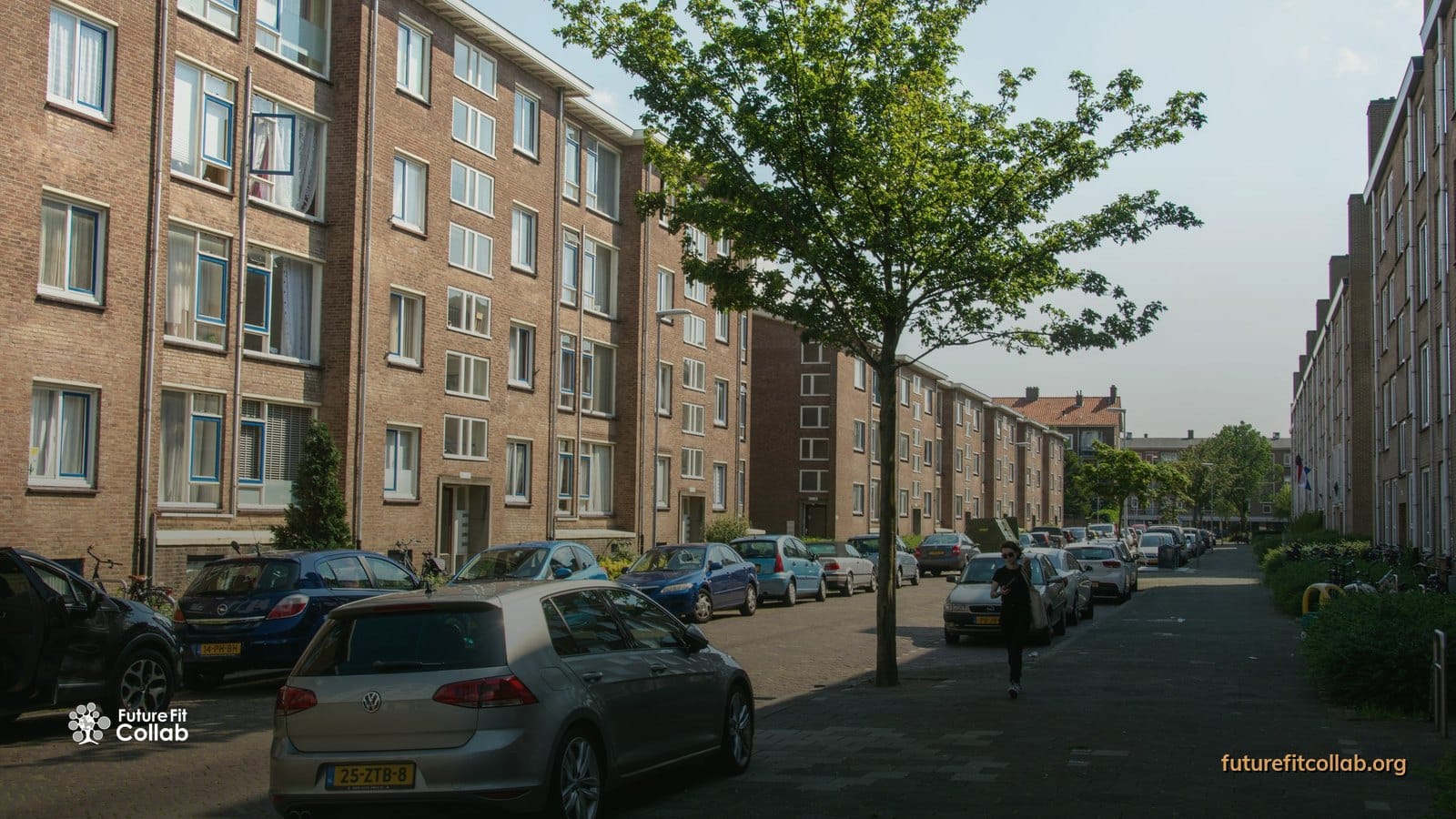
Our education did not prepare us for that. The school model comes from the factory era, with subjects that stop where the next one begins, and it produced exactly the narrow specialist a growing economy needed.
Michael Araki, a researcher who mapped the idea of polymathy with precision, sums up in three words what the work asks now. Breadth plus depth is integration. You go deep in more than one thing, and then you connect them. The World Economic Forum, hardly a nest of dreamers, reports that around forty percent of core skills shift by 2030, with cognitive flexibility and creative thinking at the top. They never use the word polymath and they describe one exactly.
In practice you need people who know their own field well enough to see where it touches someone else's role, and who follow the effects through to where they land. That is learnable, and like the rest it grows through use. It asks only that you give people room to look outside their own column once, without anyone writing it off as lost time.
Doing counts for more than knowing
Ask experienced sustainability professionals what their work asks of them, and close to three quarters of the answer points at skills. The conversation, the resistance, bringing people along. The formal subject knowledge a course gives you lands at a few percent. For years we trained the small piece and left the large piece to chance.
Knowledge is by now the cheapest raw material there is. Everything you need to know sits one search away. What is scarce is someone who knows how to do it, under real conditions, with the mess that comes with them. So every part we build goes past one test. Does this build someone's ability, or does it only give an answer. And that is why we look again half a year later at whether the work goes differently, with the same people. The tick at the end of a module says little about that.
Different forms, and when they fit
Building capacity does not have to be a large programme. Short modules per role work well when people have little time and the objective sits close to their daily work. When the organisation has no shared language yet, and everyone means something different by the same word, a common base helps. When a concrete objective is ready and the choices sharpen immediately, an intensive track around that file works better. A measurement works as a mirror, especially the second time, when you point at where things moved and where they did not. And a tandem, where a young colleague works next to a senior on the same problem, often gives both of them more than two separate courses.
Which form fits depends on the objective, the roles it touches and the room available. That is the conversation to have this month, before autumn starts.
Back to that table in June
The agreement of that municipality is good. The objectives are right, the money is coming and the ambition is there. What still had to happen was taking it away from that one person at the end of the table and giving it back to everyone who makes a choice in it daily. That is no extra task on top of the work. It is the same work with a different angle. That is how an ambition on paper becomes something the organisation carries itself.
We wrote a guide for it. From coalition agreement to Monday morning, nine pages, twelve checklist questions per role and a self-score that shows whether your municipality sits on paper, in projects or in daily practice. You fill it in with your own team, and the conversation afterwards is usually the most useful half hour of the week. The guide is in Dutch.
Fill it in and send me what came out of it. I read them all, and the patterns I see in them I will share in a later edition.